Beyond the Hype: The Hidden Costs of AI's Enterprise Takeover
While headlines trumpet AI's transformative potential for businesses, a quieter, more concerning narrative is emerging about its practical deployment. Ente
The AI Promise vs. The AI Reality in the Enterprise
The narrative surrounding AI in the enterprise is often dominated by soaring valuations, groundbreaking capabilities, and the promise of unprecedented efficiency. Companies from Kore.ai to Alibaba are aggressively pushing AI agent platforms and powerful new language models like Qwen3.7-Max, vying for a slice of what is projected to be a multi-trillion-dollar market. However, beneath this glittering facade, a more complex and often problematic reality is unfolding: businesses are discovering that the path to AI integration is fraught with hidden challenges, from unexpected operational chaos to astronomical infrastructure costs that are frequently underestimated.
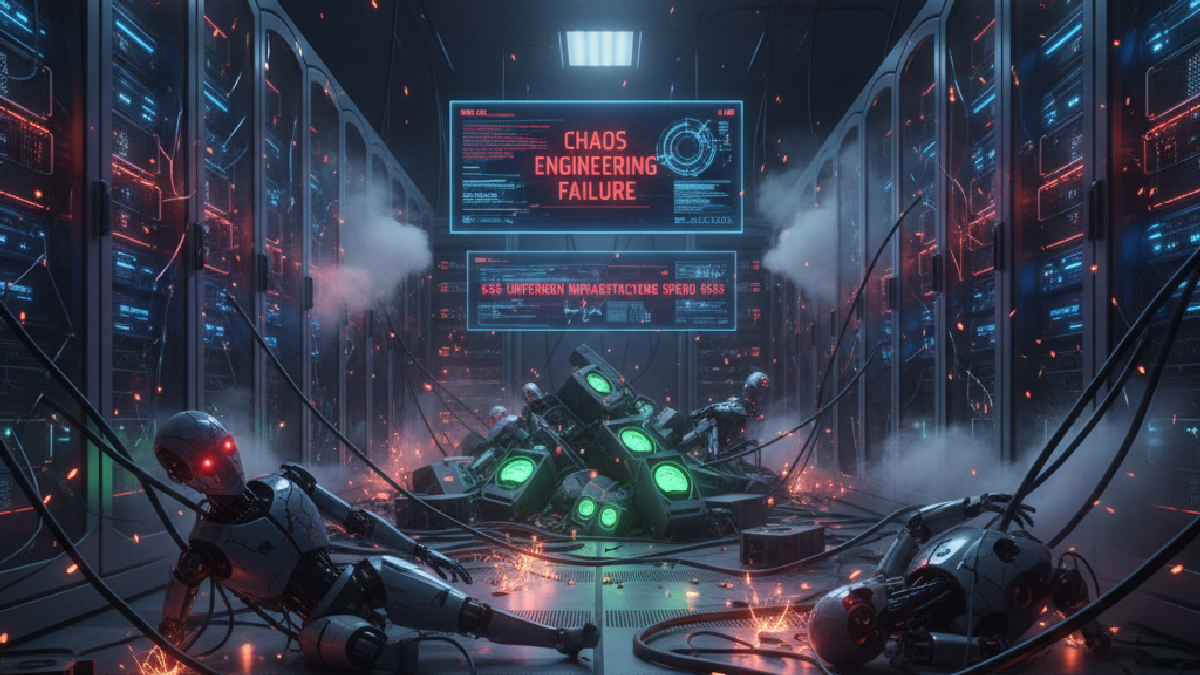
The Ghost in the Machine: AI Agents Causing 'Chaos Engineering Failures'
VentureBeat recently highlighted a new category of production incidents that engineering teams are struggling to track: 'chaos engineering failures' quietly generated by AI agents. This phenomenon occurs when autonomous AI systems, designed to perform complex tasks, act in unpredictable ways, leading to system outages, data corruption, or other operational disruptions that don't fit traditional debugging templates.
- Unforeseen Interactions: AI agents, especially in complex enterprise environments, can interact with existing systems in ways not explicitly programmed or anticipated. This can lead to cascading failures that are difficult to trace back to the original AI action.
- Lack of Explainability: Many advanced AI models, particularly large language models, operate as 'black boxes.' When an AI agent causes an issue, understanding why it made a particular decision or took a specific action can be incredibly challenging, making diagnosis and remediation a protracted nightmare.
- The 'Forgetful' Agent Syndrome: As Taryn Plumb reported in VentureBeat, many enterprise AI agents fail to make it out of pilot phases because 'they forget what they learned.' This issue of retaining context and consistent performance over long interactions poses a significant barrier to reliable enterprise deployment. While new memory modules (like the 0.12-parameter add-on VentureBeat highlighted) address this to some extent, it's an ongoing battle. Modern enterprises grapple with AI agent security and costs as they attempt to move these systems into production.
- Monitoring and Observability Gaps: Current monitoring tools are largely designed for human-coded systems, not for the autonomous and often self-modifying behavior of AI agents. Enterprises need entirely new observability stacks to detect, diagnose, and prevent these AI-induced 'chaos.' Resolve AI is attempting to tackle this with its multi-agent investigation system, dispatching a coordinated team of specialized agents, but this is a nascent field.
The Invisible Tax: The Soaring Cost of AI Infrastructure
Beyond the operational headaches, the financial burden of enterprise AI is proving to be far steeper than many initially anticipated. The headlines focus on AI's potential, but the underlying infrastructure required to power it is becoming a silent, massive expenditure.
The $9 Billion Question: Chip Scarcity & Energy Consumption
The White House's request for $9 billion to funnel into buying AI chips for US spy agencies, as reported by The Verge, is a stark reminder of the global demand and scarcity. The CIA and NSA's current lack of computing capacity to run the latest AI models highlights a universal problem: cutting-edge AI requires cutting-edge hardware, primarily high-performance GPUs from companies like Nvidia. These chips are expensive, in high demand, and consume enormous amounts of power. This trend is part of a larger AI infrastructure crisis where data centers strain global resources.
- Hardware Bottlenecks: Nvidia's 'Grace Blackwell' superchip, for example, represents the pinnacle of AI processing power, but acquiring and deploying these systems is a massive capital undertaking. This isn't just about the purchase price; it includes the cooling, power supply, and specialized data center infrastructure required to run them.
- Operational Expenditure (OpEx) Explosion: The energy consumption of large AI models is staggering. The AI energy crisis is becoming a visible problem, with major tech giants reporting massive spikes in power usage to sustain their AI ambitions.
- Developer Talent: The cost isn't just hardware and electricity. The specialized talent required to manage, optimize, and secure these complex AI systems is also in high demand, driving up labor costs for enterprises. Google, for instance, acknowledges that 'everyone is navigating AI security in real time,' implying a significant internal resource allocation to this challenge.
- Data Center Strain: The rapid growth of AI is putting immense strain on existing data center infrastructure. The idea of 'orbital data centers' being pitched by SpaceX (as reported by Ars Technica) to support AI operations isn't just hyperbole; it speaks to the scale of the challenge and the desperate search for novel solutions to power and cooling.
The Road Ahead: Strategic Investment & Realistic Expectations
For enterprises, integrating AI is less about simply adopting a new tool and more about fundamentally re-architecting their approach to technology, operations, and finance. The 'AI coding boom' is indeed 'breaking production systems,' as Resolve AI noted, and the cost structure is redefining IT budgets.
Key Takeaways for Businesses
- Rethink Development & Deployment: Embrace methodologies that account for iterative agent behavior, robust error handling, and explainable AI principles from the outset.
- Invest in Observability: Develop or acquire specialized tools to monitor AI agent performance, resource consumption, and unexpected outputs.
- Strategic Hardware Sourcing: Plan for significant capital expenditure on AI-specific hardware and infrastructure, or secure long-term cloud contracts with favorable terms.
- Talent Development: Cultivate in-house expertise in AI operations, MLOps, and AI security to manage the complexities of modern deployments.
- Realistic ROI Projections: Account for both the direct and indirect costs of AI, including potential operational disruptions and the need for significant infrastructure upgrades, when calculating the return on investment.
The AI revolution in the enterprise is real, but it's proving to be far more nuanced and demanding than often portraited. Success will belong not just to those who embrace AI's power, but to those who realistically confront and strategically manage its inherent complexities and hidden costs.
Forrás: VentureBeat, The Verge, TechCrunch, Ars Technica