The AI Agent Gold Rush: From Enterprise Productivity to Apple's Walled Garden
AI agents are moving beyond theoretical concepts to become practical tools across diverse platforms, from enterprise code generation to Apple's tightly con
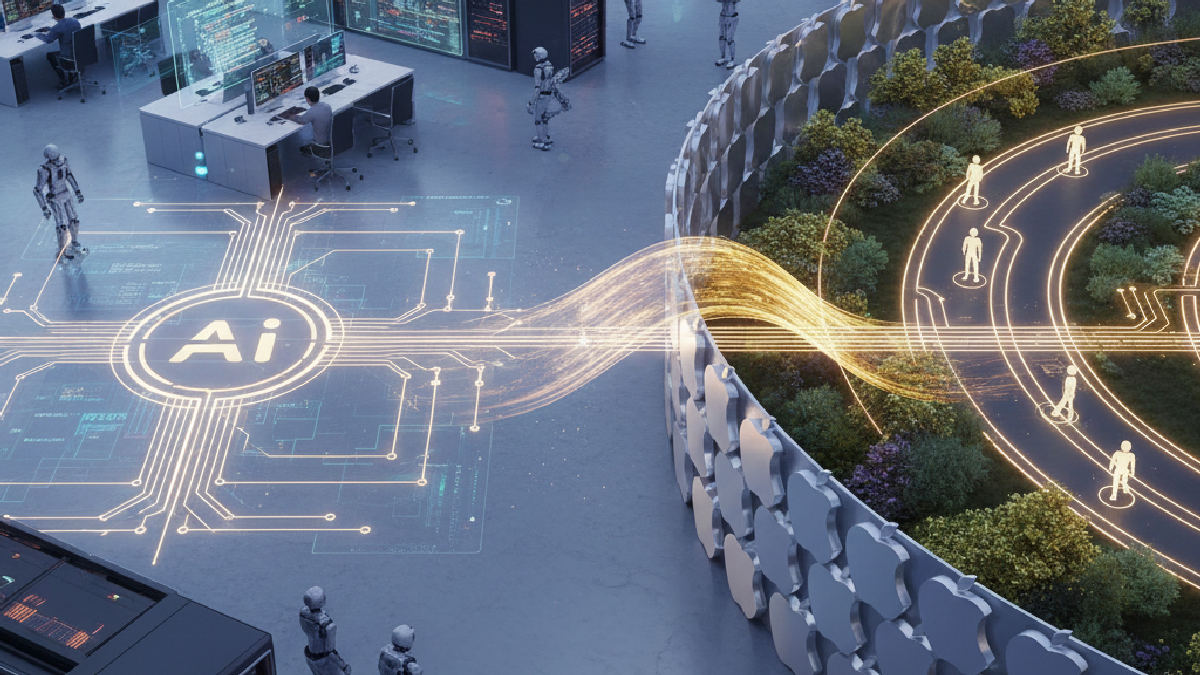
AI Agents: The New Frontier of Automation and Platform Wars
The concept of AI agents, once largely confined to research labs and sci-fi narratives, is rapidly materializing into tangible products and services, signaling a profound shift in how we interact with technology. From automating complex enterprise workflows to seamlessly integrating into consumer devices, AI agents are at the forefront of the next technological wave. However, this expansion also ignites fresh conflicts over platform control, data privacy, and the very definition of app development.
Enterprise Evolution: Coding with Claude and Workspaces with Codex
On the enterprise front, AI agents are demonstrating impressive capabilities:
- Anthropic's Claude: VentureBeat reports that Anthropic claims 80% of its new production code is now authored by Claude. This isn't just about simple script generation; it signifies a "total cultural overhaul" required for enterprises to truly leverage such advanced AI. Claude's high rate of code authorship suggests a future where AI handles a significant portion of routine programming tasks, freeing human developers for more complex architectural and innovative work.
- OpenAI's Codex & Enterprise Workspaces: Similarly, OpenAI's Codex update now allows agents to build interactive enterprise workspaces through 'Sites' and role-specific plugins. This advancement, rolling out in preview for Business and Enterprise tiers, enables cross-functional teams to bypass traditional front-end development, accelerating internal tool creation and streamlining operations significantly. The ability for AI to orchestrate multi-step workflows and manage files with increasing autonomy, as mentioned by VentureBeat, pushes the boundaries of enterprise automation.
These developments indicate that AI agents are becoming less about providing answers and more about actively *doing* things within an organization, from generating operational code to configuring entire digital environments.
Apple's Measured Entry: Poke and "Apple Intelligence"
Apple, a company renowned for its tightly controlled ecosystem, is now cautiously stepping into the AI agent arena. TechCrunch revealed that Apple has approved Poke as the first AI agent on its Messages for Business platform. This is a significant move, signaling Apple's embrace of agent technology, albeit through a sanctioned channel. The upcoming WWDC 2026 is expected to heavily feature Siri's highly anticipated revamp and "Apple Intelligence" updates, positioning AI agents at the core of Apple's future devices and user experience. This suggests Apple's strategy will likely involve deep integration of AI agents into its OS and services, maintaining its signature control over the user experience and potentially creating a powerful, yet proprietary, AI ecosystem.
Meta's Broad Approach: Creators and Smart Glasses
In contrast to Apple's guarded approach, Meta is pushing AI agents across a wider spectrum of its offerings:
- Facebook Creator Assistant: TechCrunch reports that Meta is rolling out a new AI creator assistant on Facebook, aiming to empower content creators with AI-powered tools. This moves AI beyond simple generative tasks to proactive assistance in content creation workflows, from drafting posts to managing campaigns.
- Smart Glasses and Facial Recognition: More controversially, The Verge highlighted references to a facial recognition system in Meta's smart glasses app. While Meta has expressed unhappiness with the framing of the report, this development underscores the ambitious, and sometimes privacy-challenging, scope of Meta's AI agent integration into augmented reality and wearables.
The Broader Implications: Security and Hybrid Architectures
The rise of AI agents isn't without its challenges. Security is paramount, with Microsoft launching MXC, an OS-level sandbox for AI agents, designed to prevent rogue agent behavior. This signifies a recognition that as agents gain more autonomy, their actions must be meticulously controlled within secure environments.
Moreover, the push for edge computing is evident. Google's Gemma 4 12B model can run locally on laptops, and Perplexity AI is unveiling a hybrid local/cloud inference system. This blended approach balances intelligence, accuracy, privacy, and cost, allowing sensitive data to remain on-device while tapping into cloud resources for more complex tasks. This trend suggests a future where AI agents seamlessly operate across distributed environments.
Conclusion: A New Era of Autonomous Software
The rapid proliferation of AI agents marks a significant evolution in software. These intelligent entities are poised to transform productivity, creativity, and user experience across both enterprise and consumer landscapes. However, their pervasive integration necessitates robust security frameworks, careful consideration of ethical boundaries, and continued innovation in hybrid computing architectures. The battle for the dominant AI agent platform is just beginning, and its outcome will shape the future of digital interaction.
Source: TechCrunch, The Verge, VentureBeat