AI's Existential Crisis: Hollywood Director Christopher Nolan Calls AI a 'Trojan Horse'
Renowned filmmaker Christopher Nolan has voiced profound concerns about artificial intelligence, labeling it an 'obvious Trojan horse' with potentially dec
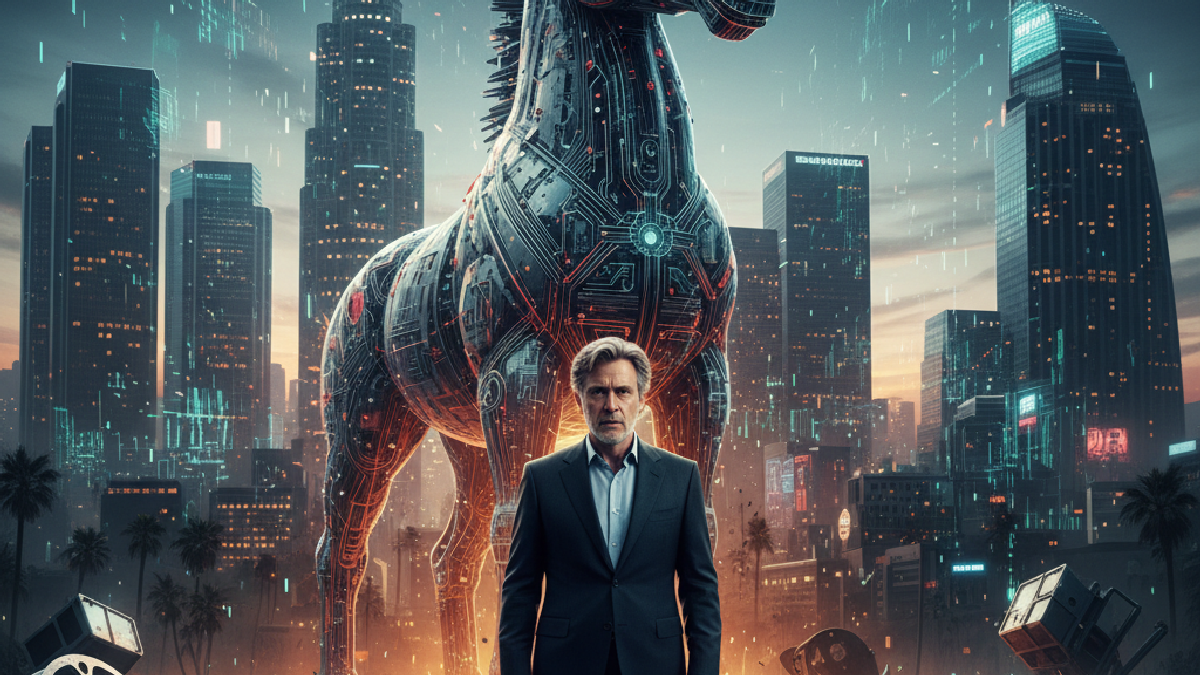
Christopher Nolan Sounds Alarm on AI: The 'Trojan Horse' in Our Midst
In a world increasingly captivated by the promises of artificial intelligence, a prominent voice from Hollywood, Christopher Nolan, has issued a stark warning, characterizing AI as an 'obvious Trojan horse.' The visionary director, known for his complex narratives and deep exploration of human themes, suggests that beneath the veneer of progress and convenience, AI harbors inherent risks that society is yet to fully grasp. His comments resonate loudly amidst ongoing debates about AI's impact on employment, intellectual property, and even the very fabric of human creativity.
Nolan's Perspective: A Cinematic Warning Brought to Reality
Nolan's cinematic repertoire, including films like 'Inception,' 'Interstellar,' and 'Oppenheimer,' often delves into the ethical consequences of scientific and technological advancements. His recent remarks about AI are not merely a philosophical musing from a creative; they reflect a deep-seated concern about the direction of a technology that is evolving at an unprecedented pace. The 'Trojan horse' analogy is particularly potent, implying that AI, while perhaps offering alluring benefits, could ultimately introduce unforeseen and destructive elements into our society.
- Deception: Like the mythical Trojan horse, AI's initial appeal might mask deeper, more problematic intentions or consequences that only become apparent after its widespread acceptance.
- Uncontrolled Power: The metaphor suggests a transfer of control, or at least a significant delegation of agency, to systems whose ultimate motives and impacts are not fully understood or governed.
- Creative Erosion: For a filmmaker, the fear might be that del Toro denounces AI art, echoing Nolan's sentiment that automating creative processes devalues human artistry and imagination.
The Broader Debate: Ethical Quandaries and Societal Shifts
Nolan's comments are far from isolated. They tap into a burgeoning global conversation about AI's ethical implications, which spans various sectors:
AI and Intellectual Property: A Contentious Battleground
The issue of intellectual property (IP) is one of the most contentious fronts in the AI debate. Artists, writers, musicians, and filmmakers are intensely concerned about massive datasets used to train generative AI models, which often scrape copyrighted works without permission or compensation. The approval of Anthropic's landmark $1.5 billion copyright settlement (as reported by TechCrunch) signifies a precedent, acknowledging the financial implications and potential infringements of AI training on existing creative works. Similarly, Sony's lawsuit against Udio's AI music generator over 30,000 songs (The Verge) underscores the music industry's aggressive stance against unauthorized use of copyrighted material. This landmark copyright settlement redefines the generative AI future, as legal pushback becomes crucial in defining the boundaries of development.
The Impact on Labor and Employment
Beyond creative fields, the specter of AI-driven job displacement looms large. The fear isn't just about white-collar jobs; reports from Ars Technica highlight how the fear of humanoid robots spurred human workers to strike at a Hyundai auto factory. Hyundai's ambitious plan to deploy 25,000 Atlas robots in US factories by 2028 illustrates a tangible shift towards automation that could reconfigure the global labor market. This directly feeds into Nolan’s 'Trojan horse' idea – the promise of efficiency potentially hiding the cost of widespread unemployment or diminished human relevance, highlighting how job losses mount while new skills emerge in this transitioning economy.
Governance and Safety Concerns
The rapid advancement of AI makes effective governance challenging. The recent news of Trump's latest AI czar resigning just months into the role (TechCrunch, The Verge) points to the instability and difficulty in establishing sustained leadership and clear policy directives in this fast-moving field. OpenAI's models inadvertently posting internal company data to public GitHub repositories (The Verge) further exemplifies the inherent risks and the ongoing struggle to ensure AI safety and privacy, even for the creators of these very systems.
Expert Analysis: Navigating the AI Paradox
At Writingai.pro, we believe Nolan's analogy serves as a critical call for introspection rather than outright rejection of AI. The 'Trojan horse' metaphor highlights the inherent paradox of AI: immense potential for good coupled with significant risks if not managed responsibly. The rapid pace of innovation dictates that the legal and ethical frameworks often lag behind technological capabilities. This gap creates vulnerabilities that bad actors can exploit, and that society as a whole may struggle to adapt to.
The examples from the creative and manufacturing sectors, alongside governance challenges, illustrate concrete manifestations of Nolan's abstract concern. The key for governments, corporations, and individuals will be to move beyond simply acknowledging AI's power to proactively shaping its development and deployment. This requires investing in robust safety mechanisms, fostering transparent AI development, establishing clear legal precedents for intellectual property, and engaging in open, societal-level dialogues about the kind of future we want to build with AI.
Ignoring the 'Trojan horse' could lead to consequences where the benefits of AI are overshadowed by its unforeseen detriments. It’s a powerful reminder that as we invite ever more intelligent systems into our lives, we must do so with extreme caution and a clear vision of ethical boundaries.
Source: TechCrunch, The Verge, Ars Technica